
Level 2 charging
Level 2 EV Charger Installation in Sugar Land
240-volt home charging installed to code, from First Colony out past the Grand Parkway.
Size your Level 2 circuit — (281) 870-2604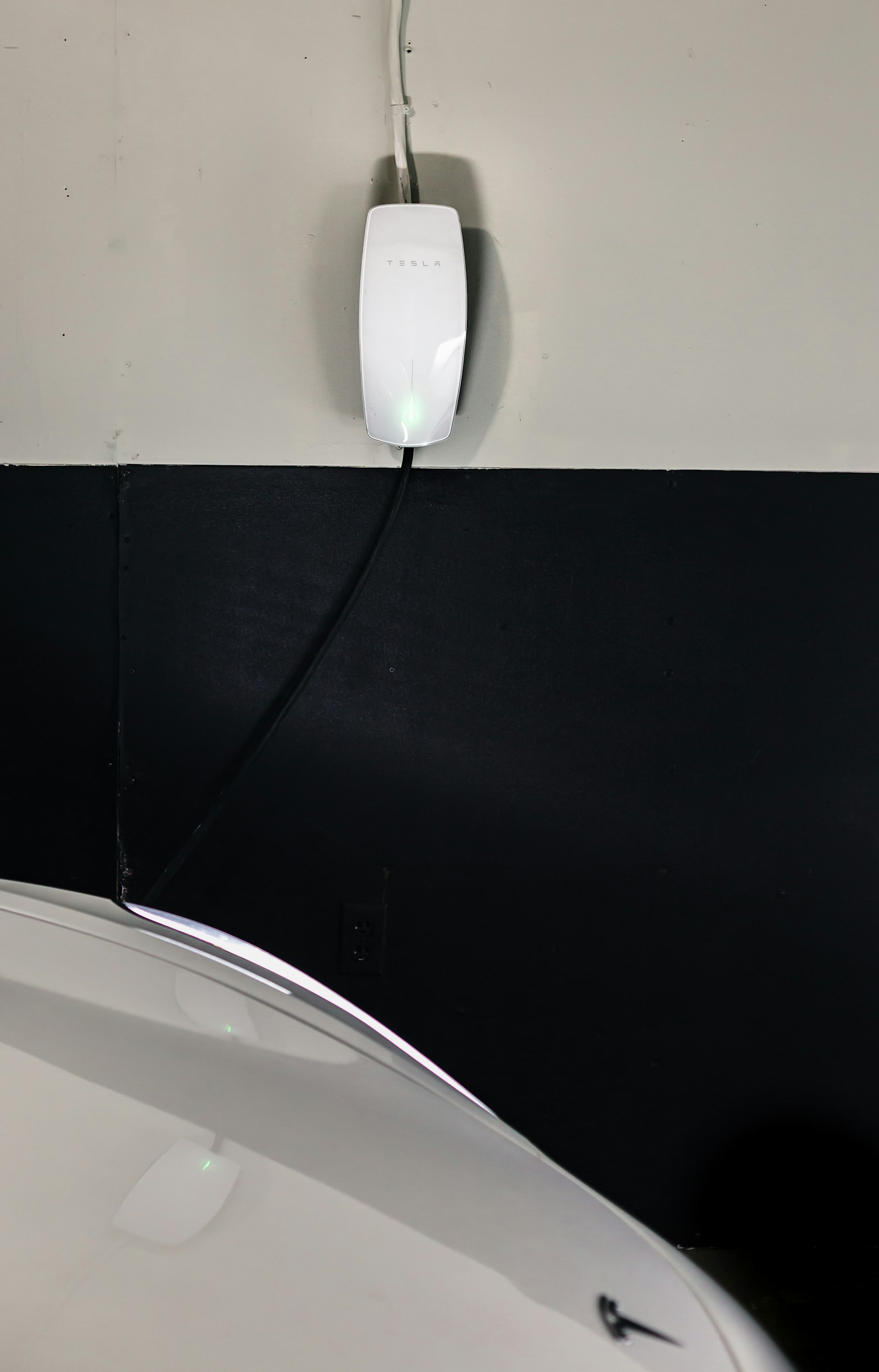
What a Level 2 Install Actually Changes
Most people book Level 2 EV charger installation in Sugar Land within a few weeks of taking delivery, once the reality of a standard household outlet has sunk in. A 120-volt plug recovers a handful of miles an hour; a 240-volt Level 2 circuit recovers roughly twenty to forty, which is the difference between planning your week around charging and never thinking about it. Sugar Land EV Charger Installation handles the electrical side of that change: the capacity check, the circuit, the mounting and the sign-off. The visit itself is usually a few hours in an attached garage, longer if the run crosses an attic or the panel sits on the far side of the house. What matters more than the hours is that the circuit is sized for continuous load rather than for the number printed on the charger box, because a Level 2 unit draws near its maximum for hours at a stretch and that is exactly the condition that exposes undersized wire.
Everything in a Level 2 Installation
A complete install is more than a breaker and a box on the wall. Here is what the scope covers.
Panel and load assessment. We open the panel, inventory the existing loads, and run the calculation that determines how much continuous current your service can give up. That number sets everything else.
Charger and amperage recommendation. We match a unit and a circuit size to your vehicle's onboard charger, since a car that accepts 32 amps gains nothing from a 60-amp circuit and you should not pay for one.
Dedicated two-pole breaker. A correctly rated breaker lands in the panel on its own circuit, with the bus and torque specs verified rather than assumed.
Conductor sizing for continuous duty. Wire is sized at 125 percent of the continuous load, and we account for ambient garage and attic temperature in Fort Bend summers, which derates copper more than people expect.
Conduit or cable run, routed and secured. The run follows a path that respects the finished space, strapped at code intervals, through EMT where it is exposed and sealed where it leaves conditioned space.
Charger mounting at a working height. We set the unit so the cable reaches your vehicle's port without stretching across the walkway, then confirm it with the car parked where you actually park it.
GFCI and disconnect provisions where required. Depending on the unit and the location, the installation may need a dedicated disconnect or specific ground-fault protection, and we build it in rather than leaving it for the inspector to find.
Bonding and grounding verification. We confirm the equipment ground is continuous and correctly terminated, which is the protection that matters when a fault happens with the cable in your hand.
City of Sugar Land permit and inspection. Pulled under our licence, scheduled by us, and attended by us.
Commissioning and a live charge test. We energise the circuit, set the unit's internal amperage limit, connect it to your Wi-Fi and app if it has one, and watch a real charging session start before we leave.
Labelling and documentation. The panel gets a legible circuit label, and you get the permit record, the invoice detail and the warranty registration.
How it works
Three Steps From Call to Charging
STEP 1
The assessment
We come out, open the panel, and photograph what is there. You will see the load calculation as we do it, including which existing circuits are eating the headroom. If the answer is that your service cannot support the charger you had in mind, you hear that at this visit rather than after a deposit. It usually takes under an hour and there is no charge for it.
STEP 2
The written quote and permit
You get one flat number covering materials, labour, the permit fee and commissioning. Once you approve it we file with the City of Sugar Land and schedule the install around your calendar. Nothing gets opened before the price is agreed, and if we discover something unexpected behind a wall we stop and price it before continuing.
STEP 3
Install, inspect, charge
The crew arrives in a confirmed window, runs the circuit, mounts and commissions the unit, and cleans up. We then meet the inspector at the follow-up appointment so you do not have to be home for it. When the sign-off lands we email you the record, and at that point the garage is finished business.
Why This Install Goes Smoothly
We right-size rather than upsell
The fastest circuit is not always the correct one, and we will tell you when your vehicle cannot use the capacity you are being sold. That conversation costs us margin and saves you several hundred dollars in copper.
Fort Bend panels are familiar ground
We work the same subdivisions week after week and know which builder panels have bus limitations and which garages hide a junction that complicates the run. That familiarity shortens the visit and tightens the estimate.
The inspection is our problem, not yours
We pull the permit, schedule it, and meet the inspector. You are not taking a half-day off work to let someone look at a breaker.
- TDLR-Licensed & Insured
- Flat-Rate Written Pricing
- Most Installs Completed in One Visit
- EVITP-Certified Installers
Book Your Level 2 Assessment
If the car is already in the driveway, the panel is the only thing standing between you and charging at home overnight. The assessment is free and it answers the question in about an hour. Once you know your number, the rest is scheduling.
(281) 870-2604 — book the free panel check